Warning Signs |
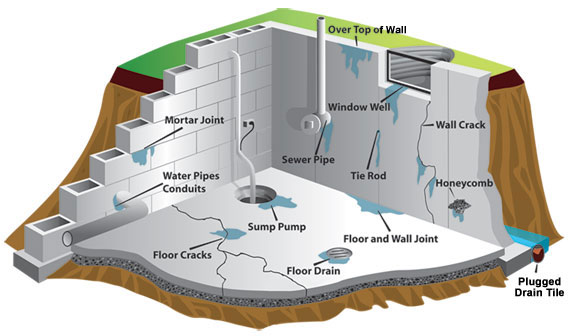
This page shows the water damage warning signs that you should be looking for. |
| |
|
 |
Musty Odor:
Musty odors are merely the result of the decay process associated with mold, mildew and dry rot. It is the odor given off by the decaying material. Once you smell it, look for the source, and try cleaning any item that has the smell. If it returns, you'll need to replace it. |
| |
|
 |
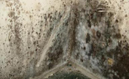
Damp Spots on Walls:
An unpainted block will turn dark gray when it is wet. A painted wall will show discoloration, or a darkening of the paint. A poured wall might show discoloration. In any case, there might be white or dark outlines surrounding the area, which means that either it has leaked before, or that substantial moisture has come through in that area. |
| |
|
 |
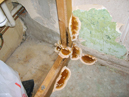
Mold or Mildew:
Mold and mildew are living, breathing organisms that grow and multiply anywhere there is excessive moisture. For those of us exploring our basement, mold and mildew can grow in the walls, carpeting, furniture, or anywhere else it can find a food source. |
| |
|
 |
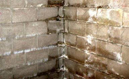
Dry Rot:
This can appear as a brownish-black fungal growth on walls, clothing and other surfaces. It typically grows on wood surfaces. Keep in mind that dry rot is a byproduct of the decaying process -- you'll need to not only replace whatever is damaged, but also find and cure the cause of the dry rot. |
| |
|
 |
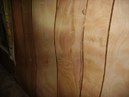
Cracked Walls and Floors:
Cracks can come in a variety of shapes, sizes and directions. For example, you may see step-cracks on the wall. You might find vertical cracks, or horizontal cracks. In any of these cases, something is causing this to happen -- cracks don't usually appear naturally. It could be from settling, pressure on the walls or under the floor, or any number of other causes. |
| |
|
 |
Warped Paneling:
Wood is porous. It absorbs moisture. Warped paneling is a sign that excessive moisture exists, and you need to find out why. The good news: if you find the source, you can fix it so that your new paneling won't warp. The bad news: you can't repair warped paneling, you have to replace it. |
|
|